Configuring the Factry Historian Datasource plugin for Grafana
In this guide, we will complete the installation and configuration of the Factry Historian datasource plugin for Grafana.
Prerequisites
- An installed and properly configured Factry Historian, see installing Factry Historian.
- A running instance of Grafana of at least v10.4.0.
- Admin rights in Grafana.
- A user with READ privileges in Factry Historian
Step-by-step guide
1. Create a read-only user in Factry Historian
If you already have a user group with READ privileges (such as the default Reader group), and a user assigned to the group, you can skip this step. If not, please complete this step first for a secure setup.
We first create a user group with read privileges enabled and add a grafana user to this group from which to generate the API token.
- Create a user group in the according Historian organization:
- Go to Factry Historian
- Go to Configuration > Groups.
- Click on Create user group and give the user group a name f.e. "factry-historian-readers".
- Click on the Edit button to edit the Privileges. Assign the following privileges:
- READ_ASSETS
- READ_COLLECTORS
- READ_EVENT_CONFIGURATIONS
- READ_EVENTS
- READ_EXTERNAL_DATABASES
- READ_MANUAL_ENTRY_FORMS
- READ_MEASUREMENTS
- READ_SINKS
- READ_TASK_SCHEDULERS
- READ_TIMESERIES_DATABASES
- Create a user and add it to the newly created group.
- Go to Configuration > Users.
- Click on Add new user button,
- Fill in the fields (username, password, email, etc.)
- In the User groups field, search for the Reader group you created before. Select it and click the '+' icon. The user group should show up in the table below.
2. Install the Factry Historian Datasource in Grafana
If you will be using this datasource for the first time, you should install it first.
- Open Grafana in your browser.
- Log in with your Grafana admin credentials.
- In Grafana, go to Connections > Add New Connection.
- Search for Factry and select the Factry Historian Datasource.
- On the top right, click Install.
3. Configure the datasource
Once the plugin is installed, and while still in the Factry Historian Datasource connection page, click 'Add new datasource'.
Alternatively, navigate to Connections > Data sources and click Add data source. Select Factry Historian Datasource.
Fill in the required fields:
- Name: choose a recognizable name, e.g. 'Factry Historian' or 'USA Site' in case of multi-organizationorganization setup.
- URL: http://url-of-my-historian.company:port (typically port 8000).
- Token:
- Follow the guide Obtaining an API token
- Paste the token in the Token field in Grafana.
- Organization:
- Go to the Historian web app Configuration > Organizations.
- Select the Default organization (unless you defined another name during the Onboarding Wizard), and copy the UUID using the double file icon on the far right.
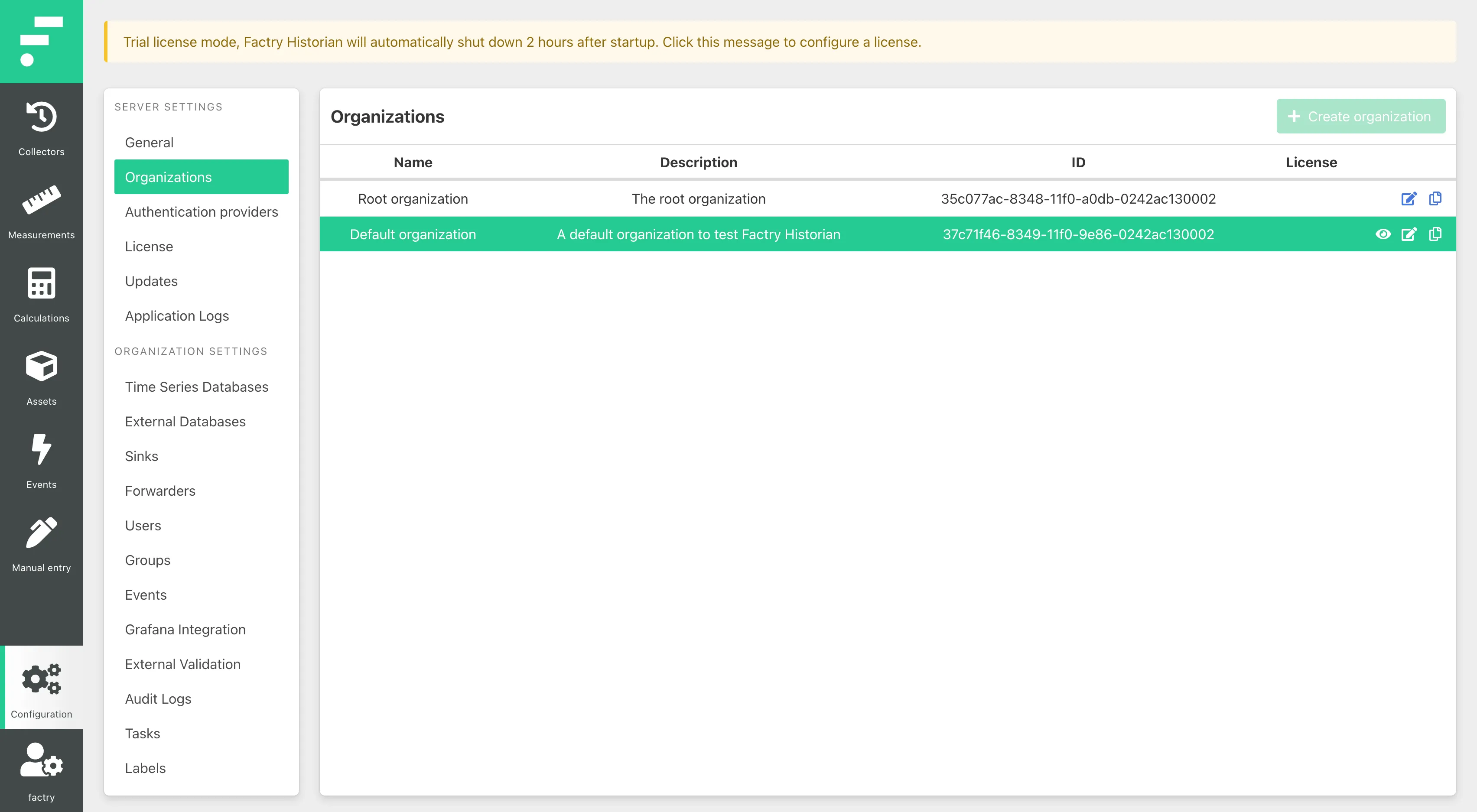
- Paste the Organization UUID in the Organization field in Grafana.
- Select Measurements as the Default tab.
4. Save & test
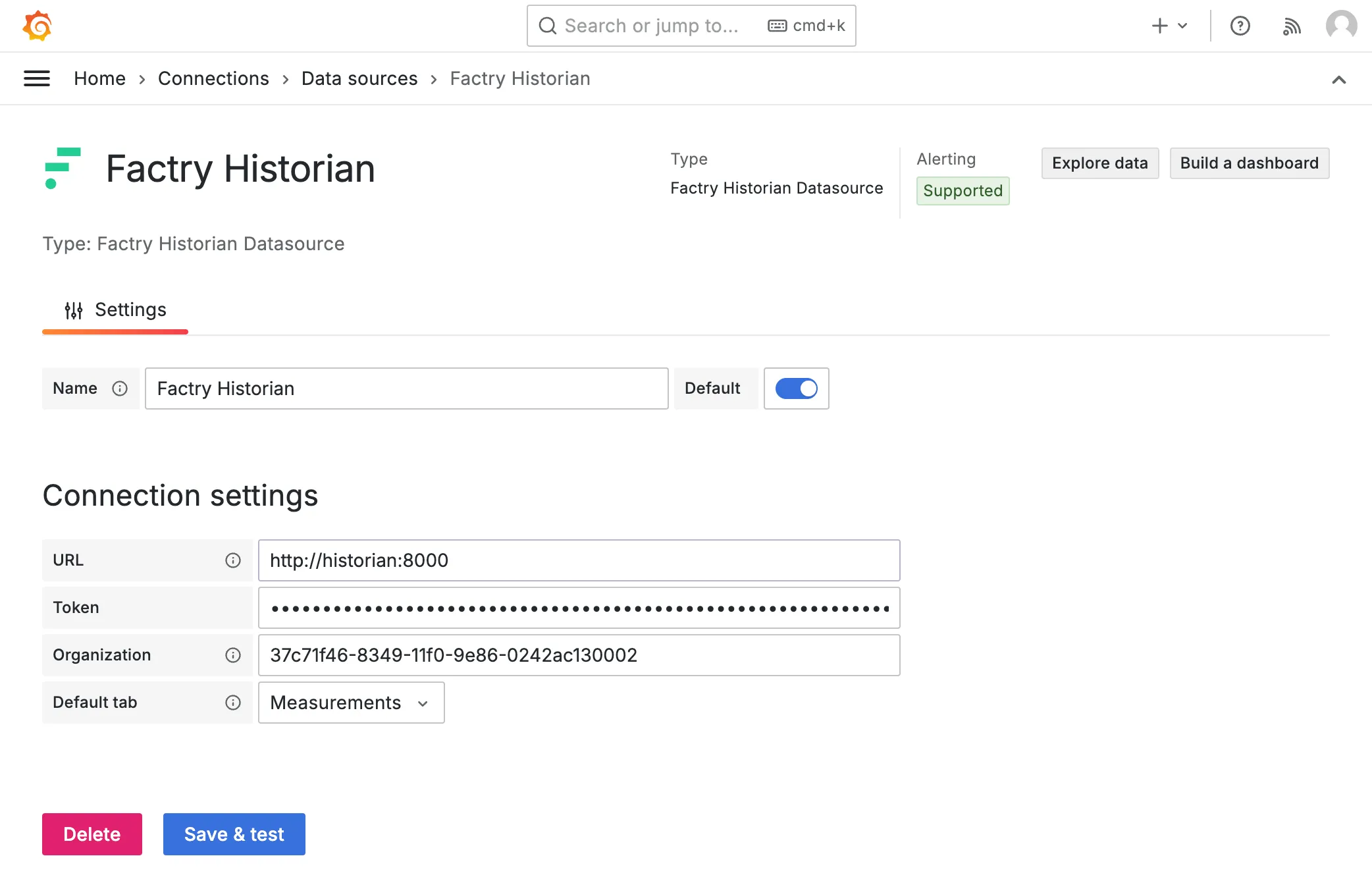
- Click Save & test.
- Grafana should confirm a successful connection.
What's next
Now that you have successfully installed the Factry Historian Datasource plugin, you can start using it: